A space to meet yourself with curiosity and care.
Are you feeling overwhelmed by anxiety, depression, or low self-esteem, and longing to feel more like yourself again?
You may not have clear words for it all, only a sense that something isn’t quite right, and a longing for more ease, clarity, or authenticity in your life. Therapy can help.
Welcome to The Self Room
The Self Room exists because too many of us have never truly been given the space to be our full, authentic selves.
Many people learn early on to perform, to shrink parts of themselves, or to prioritise the needs and expectations of others in order to feel accepted or safe. Over time, this can leave us feeling disconnected from our emotions, unsure of who we are, or exhausted by the effort of holding everything together.
The Self Room offers a place to pause. A space where there is no expectation to present in a particular way, to have the right words, or to be “doing well.” Here, there is room to stop performing and begin listening inwardly, to your feelings, experiences, and parts of yourself that may not have had space before.
Who am I?
I’m Katie Merritt (MA, PGDip, MBACP), a qualified psychotherapist offering online therapy and psychotherapy. My path into therapy began on the stage, where theatre trained me to notice what often goes unseen: pauses, subtle shifts in the body, the breath between words. This early work shaped how I practise psychotherapy today, attuned not only to what is said, but to how experiences are felt, held, and lived. This taught me that meaning is never only in what is said, it lives in the way we hold ourselves, our inner tempo, and the full richness of human experience.
Therapy with me embraces complexity and encourages you to be your most authentic, unique self. I see each session as a form of collaborative storytelling: a space where your experiences can be fully heard, felt, and explored.
Non-judgemental Approach
An accepting space to speak freely about whatever you bring.
Qualified Practitioner
Level 7 accredited integrative training, combining relational, psychodynamic, and humanistic perspectives.
Natural Healing
Healing emerges through being heard, understood, and supported at a thoughtful pace.
Why begin therapy?
When we experience emotional distress, it can feel as though we are lost in something difficult to navigate alone. At these times, having someone who can listen carefully and help make sense of what is happening can be deeply supportive. There are moments in life when the comfort of a trusted friend is enough, but there are other times when familiar patterns repeat, leaving us feeling stuck, frustrated, or hopeless. This is where therapy can help.
Therapy offers a confidential, non-judgemental space to explore your inner world with another person. It is a place where all aspects of you are welcome, the parts you value and feel comfortable with, as well as those that may feel confusing, painful, or difficult to acknowledge. Through this process, therapy can support you in developing a more compassionate understanding of yourself and a deeper curiosity about your emotional life, relationships, and experiences.
When you start your journey, you may notice a subtle shift: your shoulders drop, your breath deepens, and the parts of you that have been whispering for years suddenly have room to speak. In these sessions, the noise and chaos of the outside world quieten just enough for your truth to emerge, sometimes in words, sometimes in sensation, and sometimes in the electric dimension between the two.
Here, there is no checklist, no quick fix, no rigid tools, and no expectation to conform to society’s demands. Healing emerges through presence, attention, and gentle exploration of what you feel, think, and sense in the moment. We move at your pace, following your rhythms, noticing the metaphors and memories your body holds, allowing your story to unfold in all its richness and complexity.
“The privilege of a lifetime is to become who you truly are.“
Carl Jung

Some frequently asked questions...
What happens in the first session?
The first session is is a chance for us to slow down and get a sense of what’s bringing you to therapy. You don’t need to prepare anything or tell your whole story at once. We’ll explore what you’re hoping for, what feels difficult right now, and how I work. It’s also an opportunity for you to get a feel for whether the space feels right for you.
How long will I need therapy?
There’s no fixed timeline. Some people come for a short period to focus on a specific issue; others stay longer to explore deeper patterns or ongoing support. We’ll check in regularly about how the work feels and what you need. You’re never tied in, therapy always moves at your pace.
What if I don’t know how to talk about my feelings?
That’s completely okay. Many people come to therapy unsure how to put things into words. We’ll move gently, using curiosity, reflection, and sometimes creative or embodied approaches to help you connect with what’s going on inside. You don’t need to arrive with clarity, that’s something we can find together through a shared language.
Can therapy help even if I’m not in crisis?
Absolutely. Many people come because something feels off, stuck, or unfulfilled rather than because of a crisis. Therapy can help you understand yourself more deeply, navigate life changes, build healthier patterns, and feel more grounded and connected in your daily life.
What are your fees & availability?
I offer 50-minute therapy sessions at £75. My schedule is:
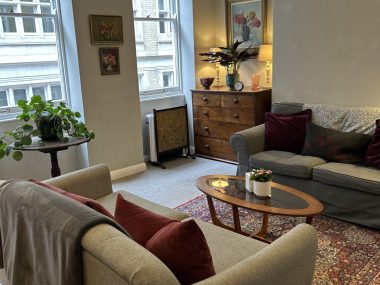
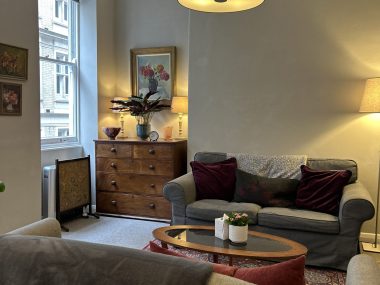
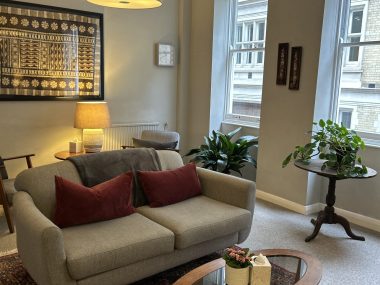
- City Therapy Rooms: Wednesdays in-person
- Online sessions: Mondays and Fridays
- Therup East, Barkingside: Fridays in-person
I also offer low-cost slots for artists, students and those experiencing financial difficulties. Please get in touch to request this.
I offer a 15-minute introductory session is free, giving you the chance to meet, ask questions, and see if therapy feels right for you, with no obligation to continue.
What if I’m nervous about starting therapy?
Being nervous is completely normal. Reaching out is a meaningful step, and it’s okay if it feels uncertain or vulnerable. My role is to meet you where you are, with warmth, steadiness, and no judgement. You can take your time, ask questions, and decide what feels right for you.
What my colleagues say...
Organisations I have worked with